A capital before Kyoto
My walks through Nara span different visits and seasons. A clear sky gives way to rain; green trees return in autumn colours. Behind those changing scenes is the history of a capital. In 710, the imperial capital was established here as Heijō-kyō. Nara was the principal capital of the period that ended in 784, before the court eventually settled in Kyoto. Its temples help explain how Buddhism, political authority and exchange with the Asian mainland shaped early Japan. That is the background I would keep in mind while walking: these buildings were part of a capital, not simply beautiful objects in a park.
Kōfuku-ji: look beyond the skyline
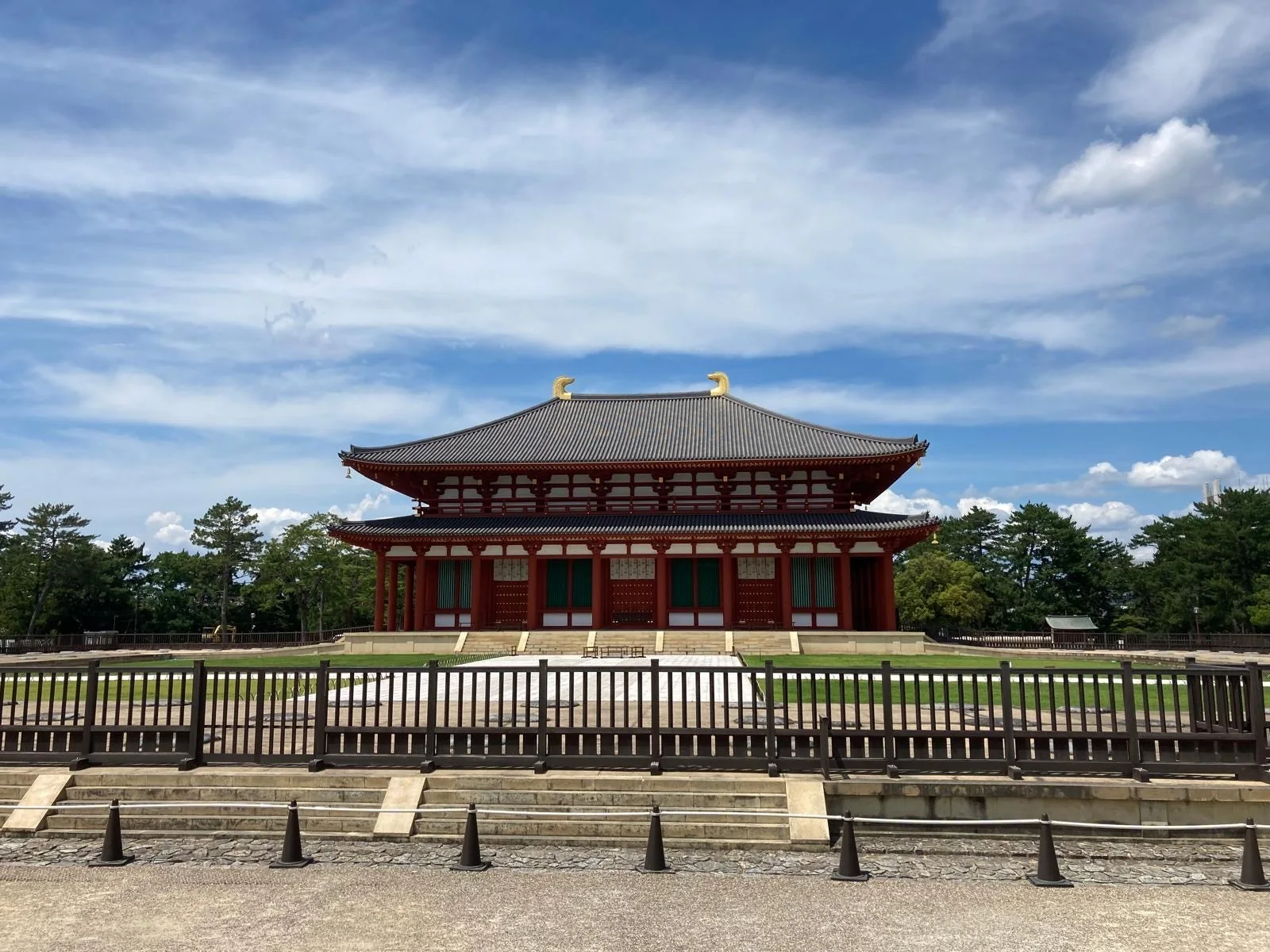
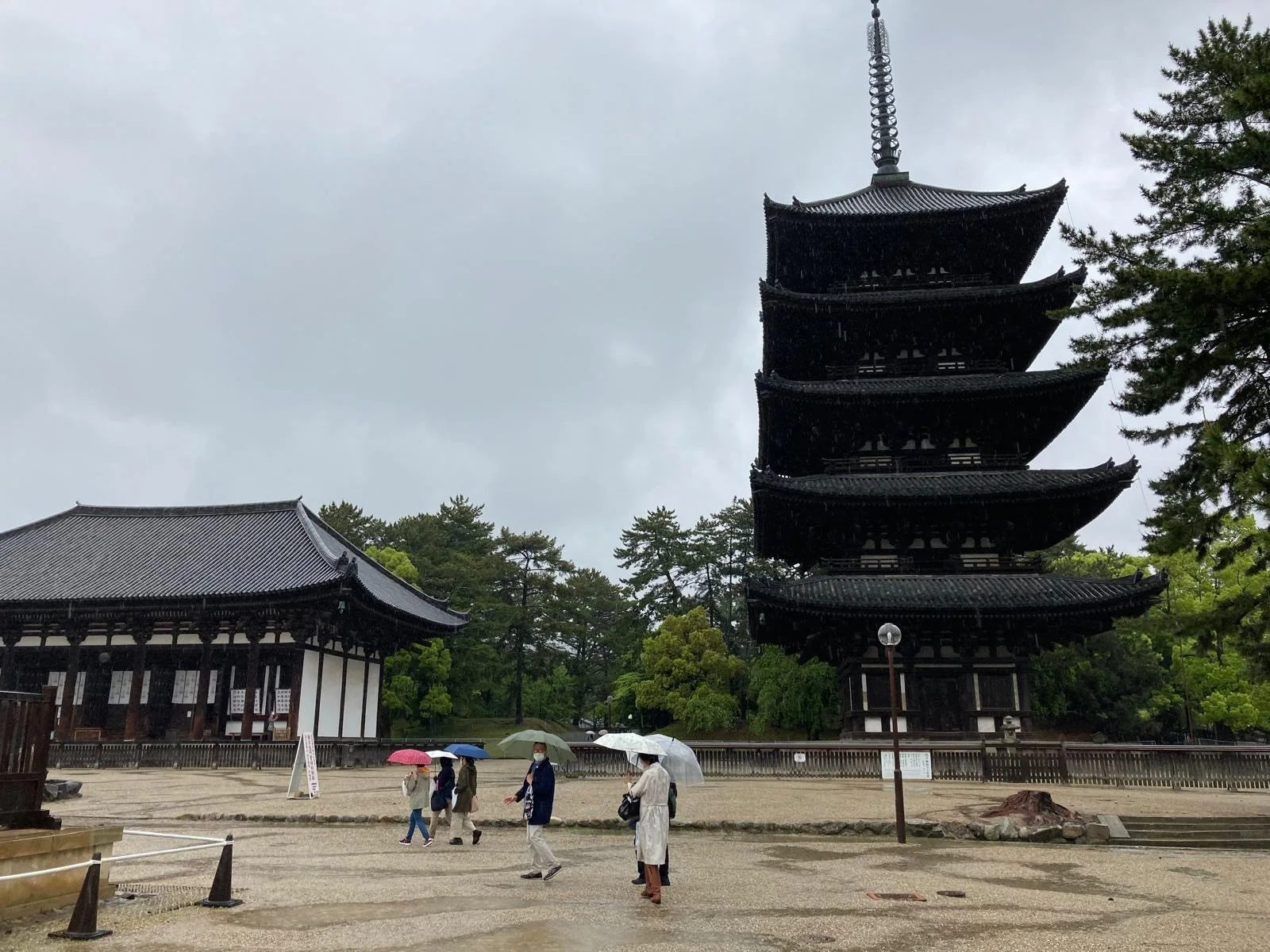
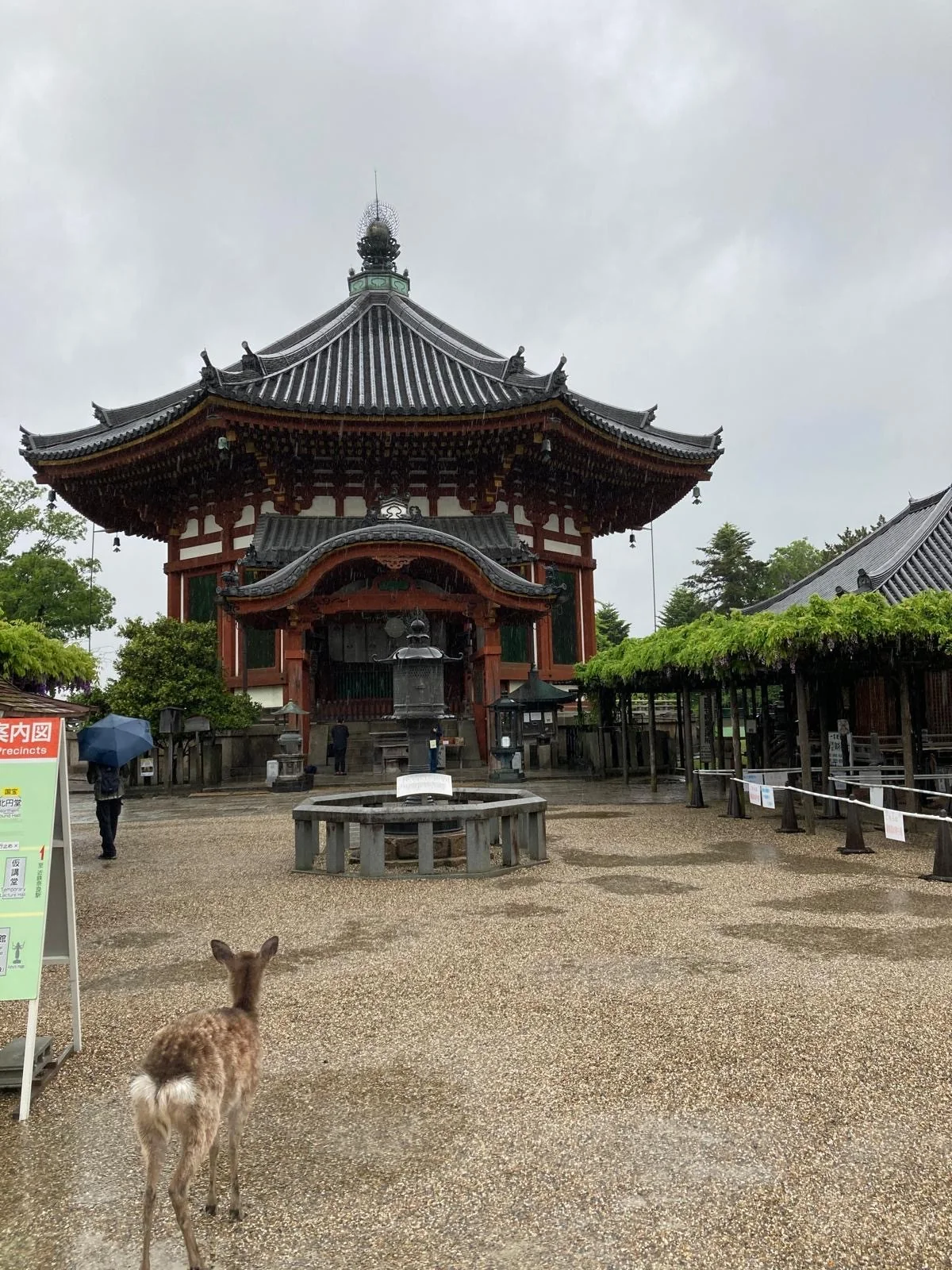
At Kōfuku-ji, my photographs move between the broad frontage of the Central Golden Hall, the Southern Round Hall and the five-storey pagoda. The temple’s connection to the powerful Fujiwara family gives this collection of buildings a political as well as a religious history. It moved to Nara with the capital in 710. The pagoda seen in my earlier photographs is a reconstruction dating from 1426, a useful reminder that preservation here has always included rebuilding. It is undergoing major conservation work, so the unobstructed view in my photograph should not be treated as a promise of what visitors will see today. Check the temple’s current notices before going.
Rain belongs in the story, too
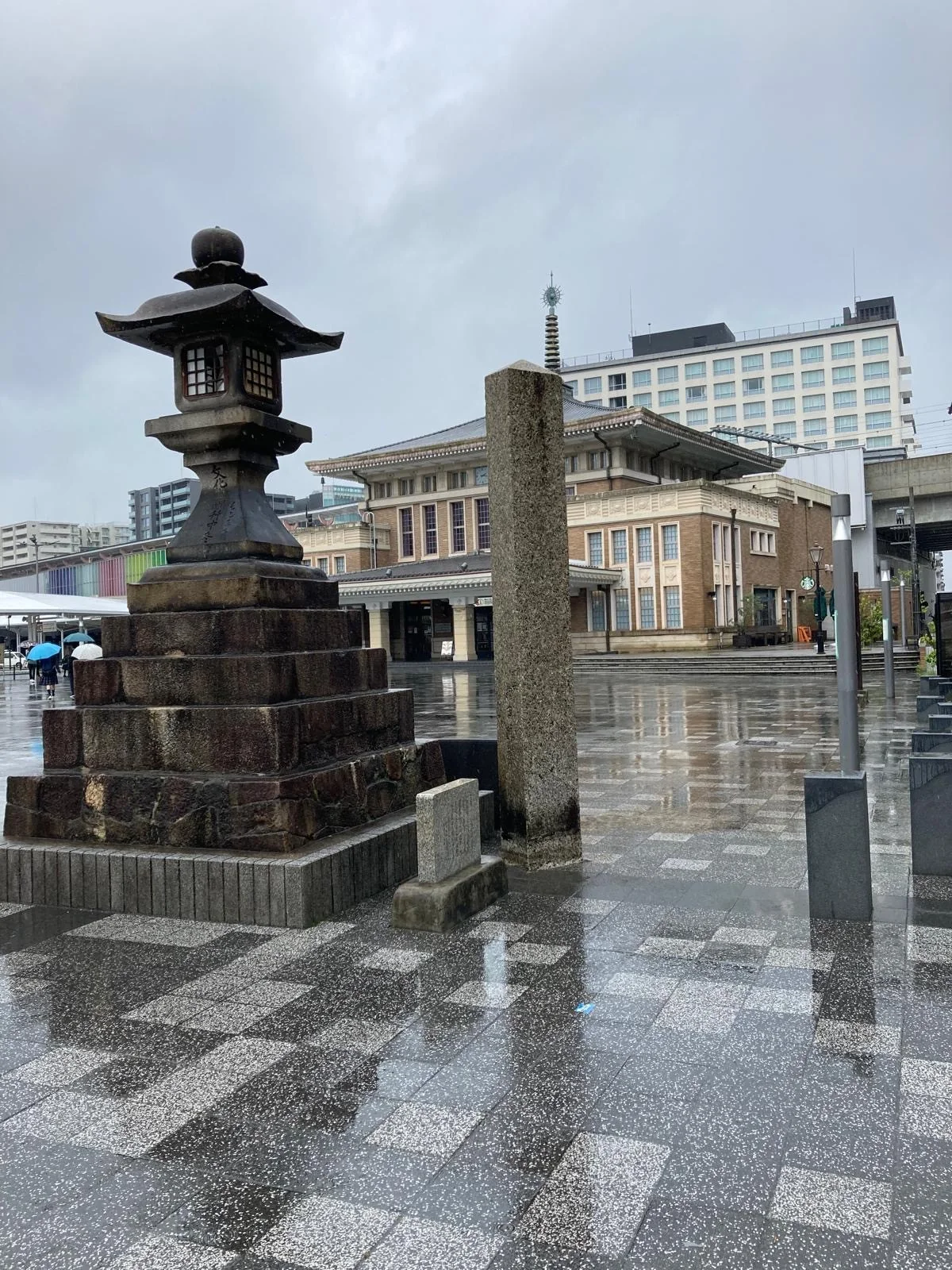
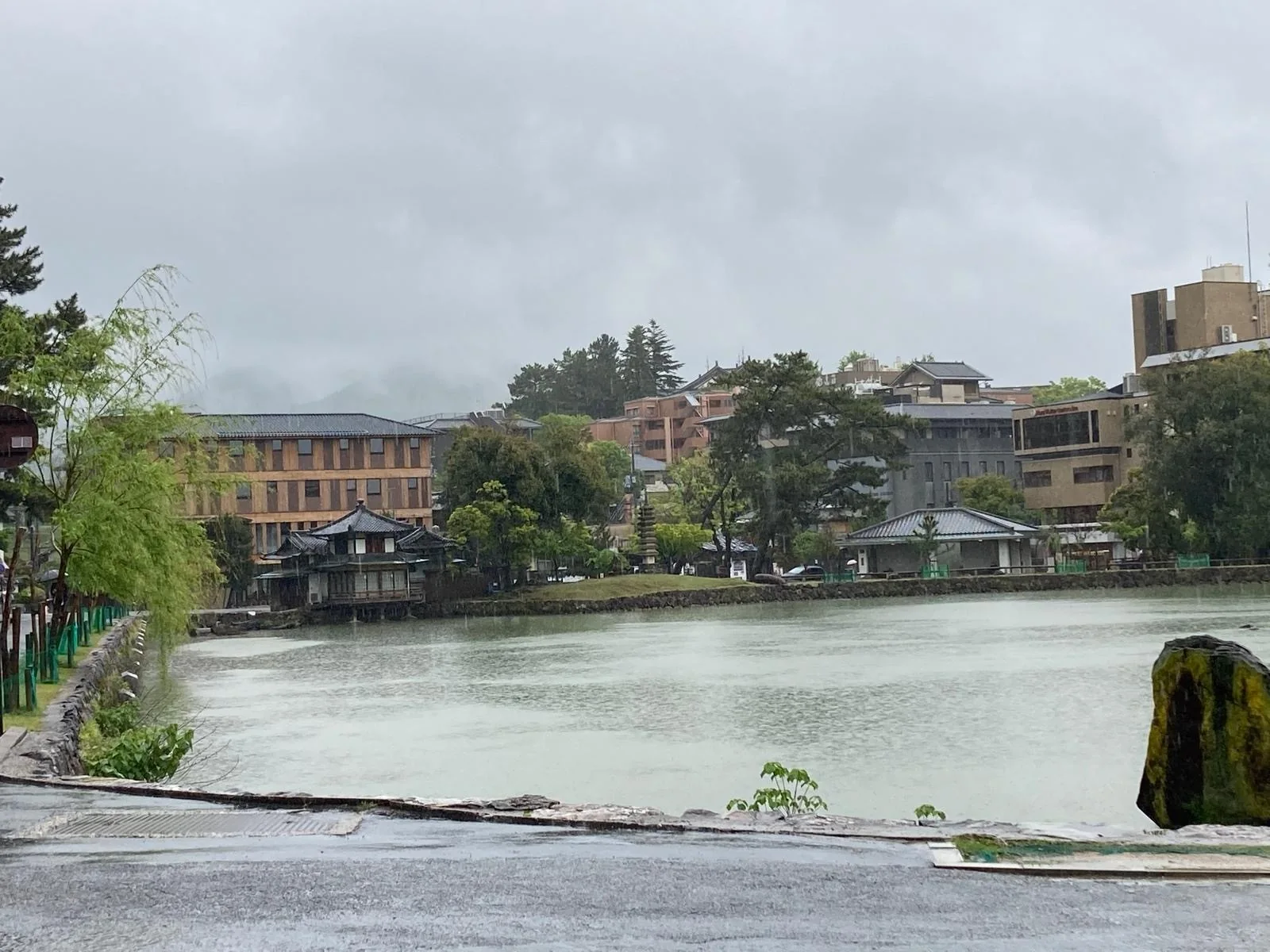
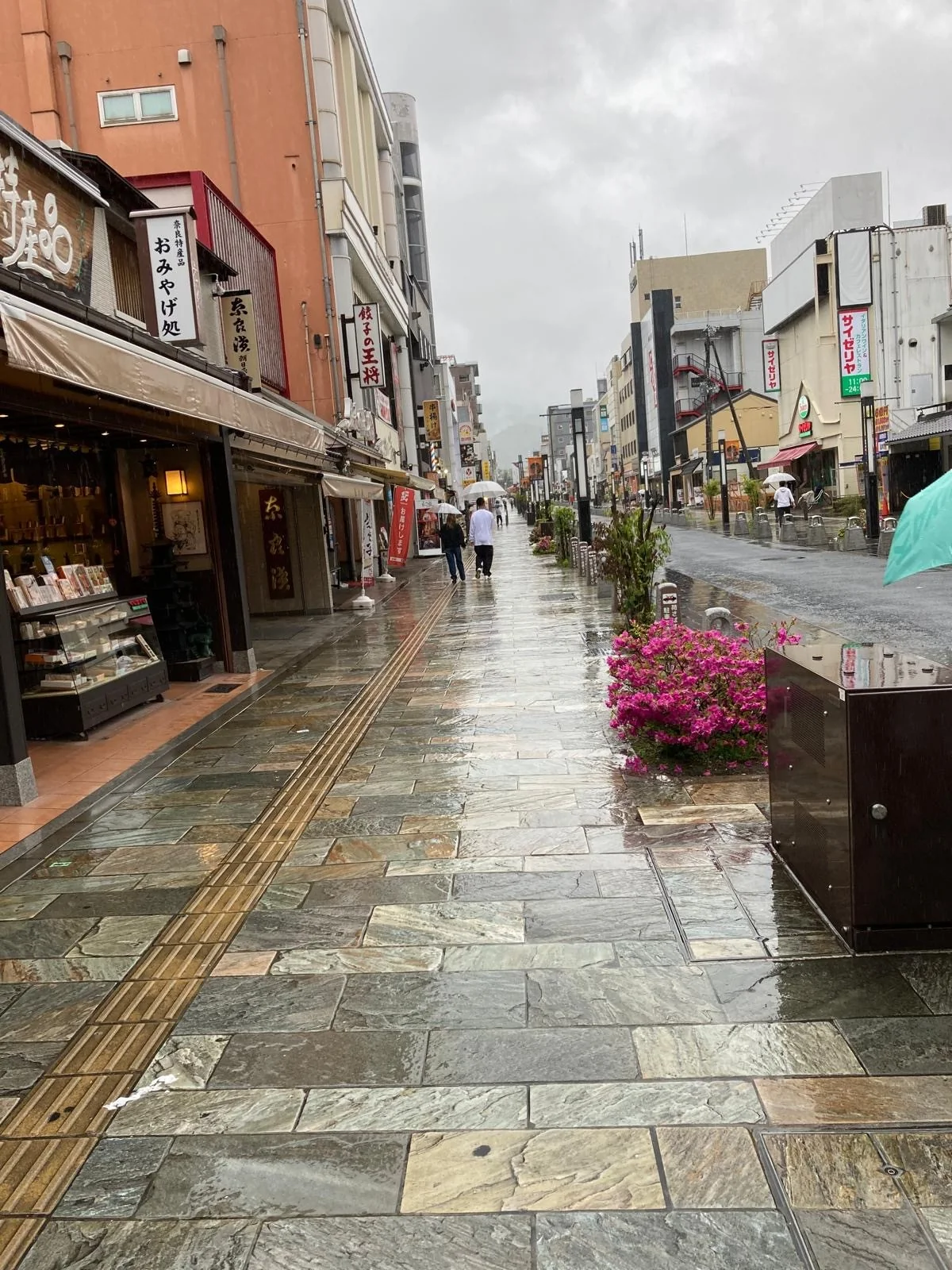
Some of my Nara photographs show umbrellas crossing the temple grounds and wet paving reflecting the sky. On those wet days, even the space between the buildings becomes part of the view. Around Sarusawa Pond, the water and the surrounding streets give a different scale to a visit after the temple roofs. This is a useful place to slow the route down rather than hurry straight from one entrance to the next. In rain, I would allow extra walking time and wear shoes with a secure grip; a city of stone paths rewards looking down as well as looking up.
The deer are part of a living landscape
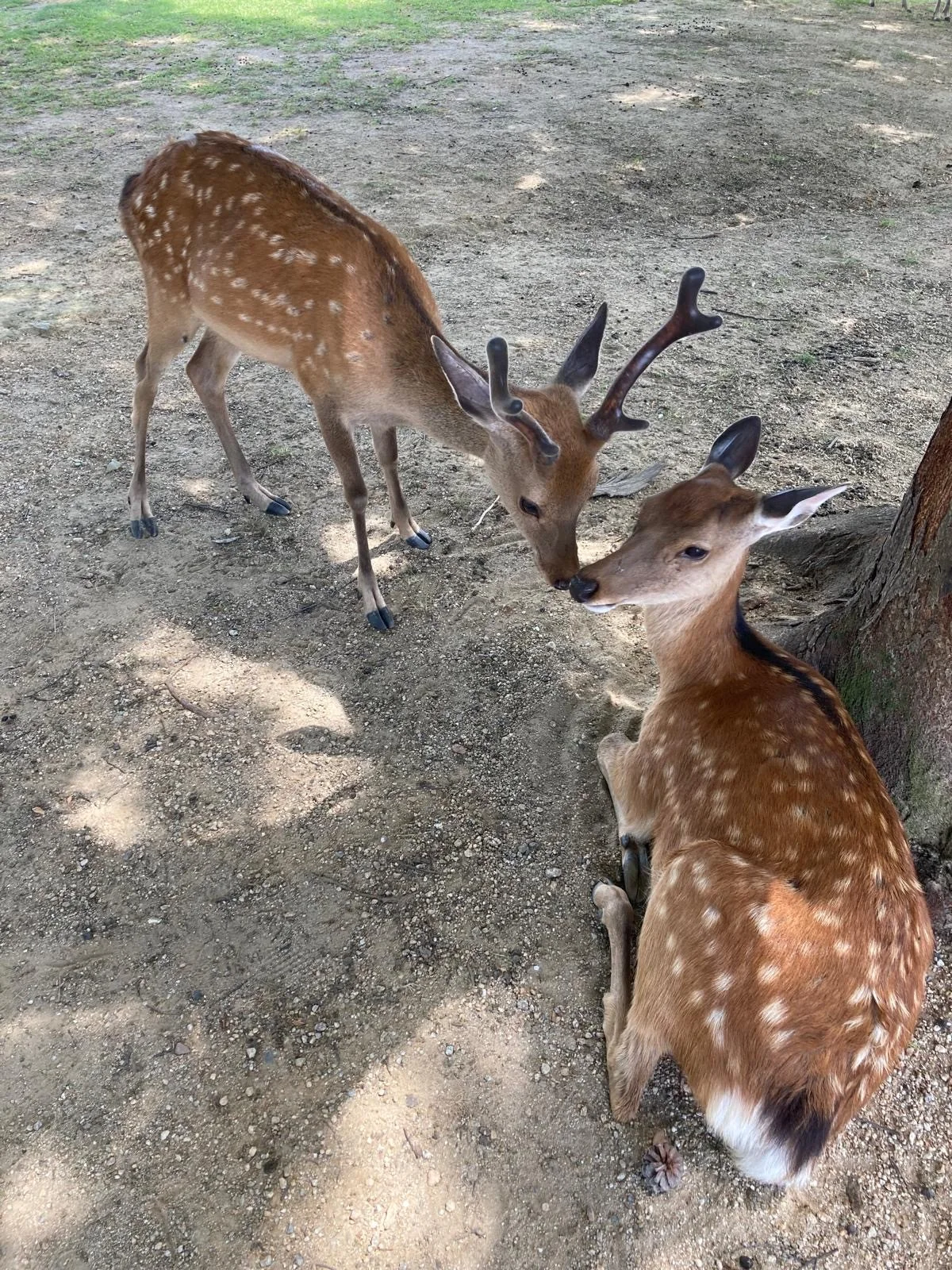
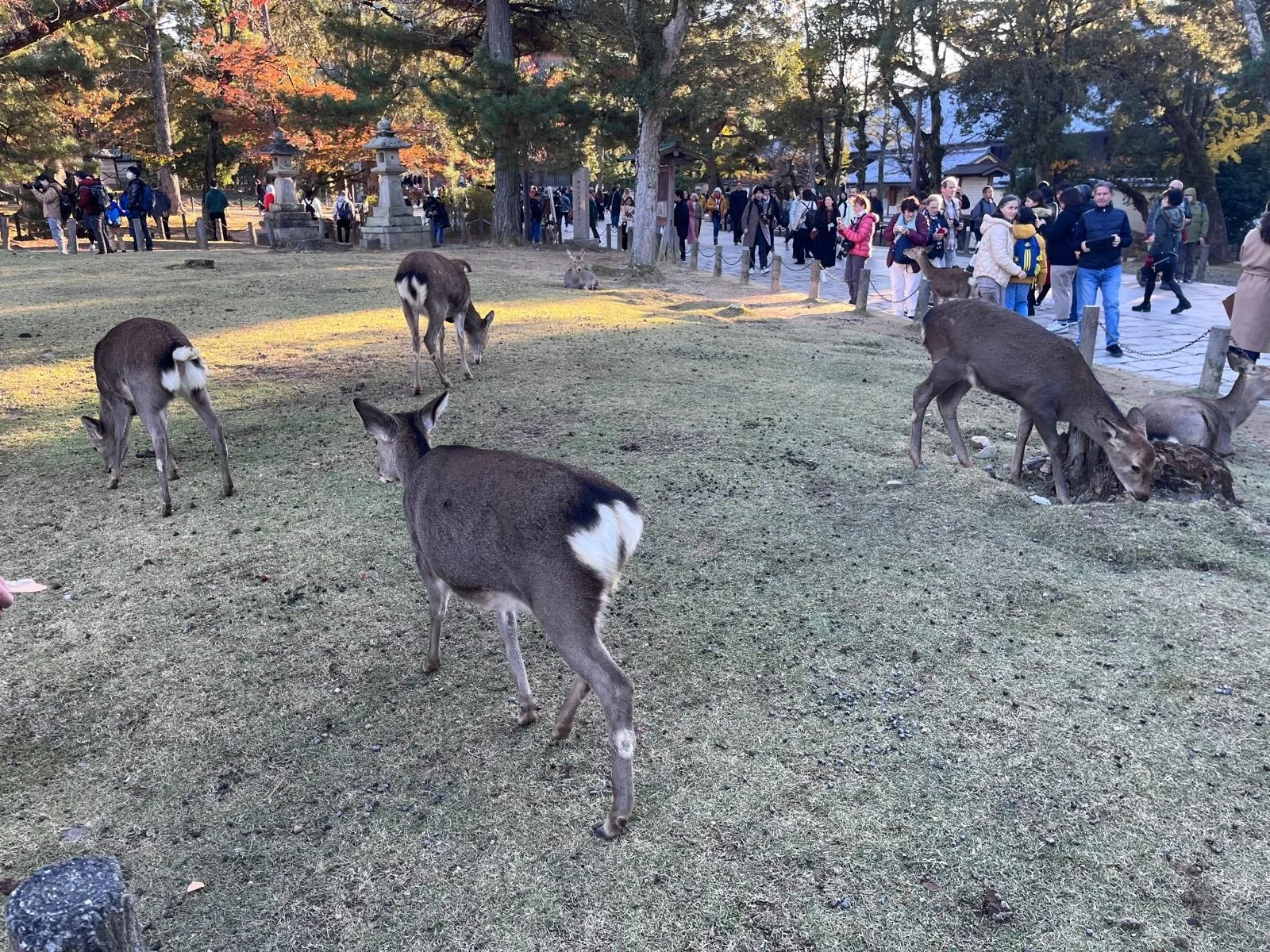
I photographed deer both close to the temple precincts and beneath trees in their autumn colours. They connect the open spaces between the monuments, but they are wild animals, not performers waiting for a photograph. Their sacred association with Kasuga Taisha is part of Nara’s cultural story. For anyone choosing to feed them, the local guidance is simple: use only the designated shika senbei crackers, do not tease or grab the animals, and supervise children closely. I would also keep bags, paper and litter out of their reach. Watching them from a little distance is an experience in its own right.
Tōdai-ji: the scale of an idea
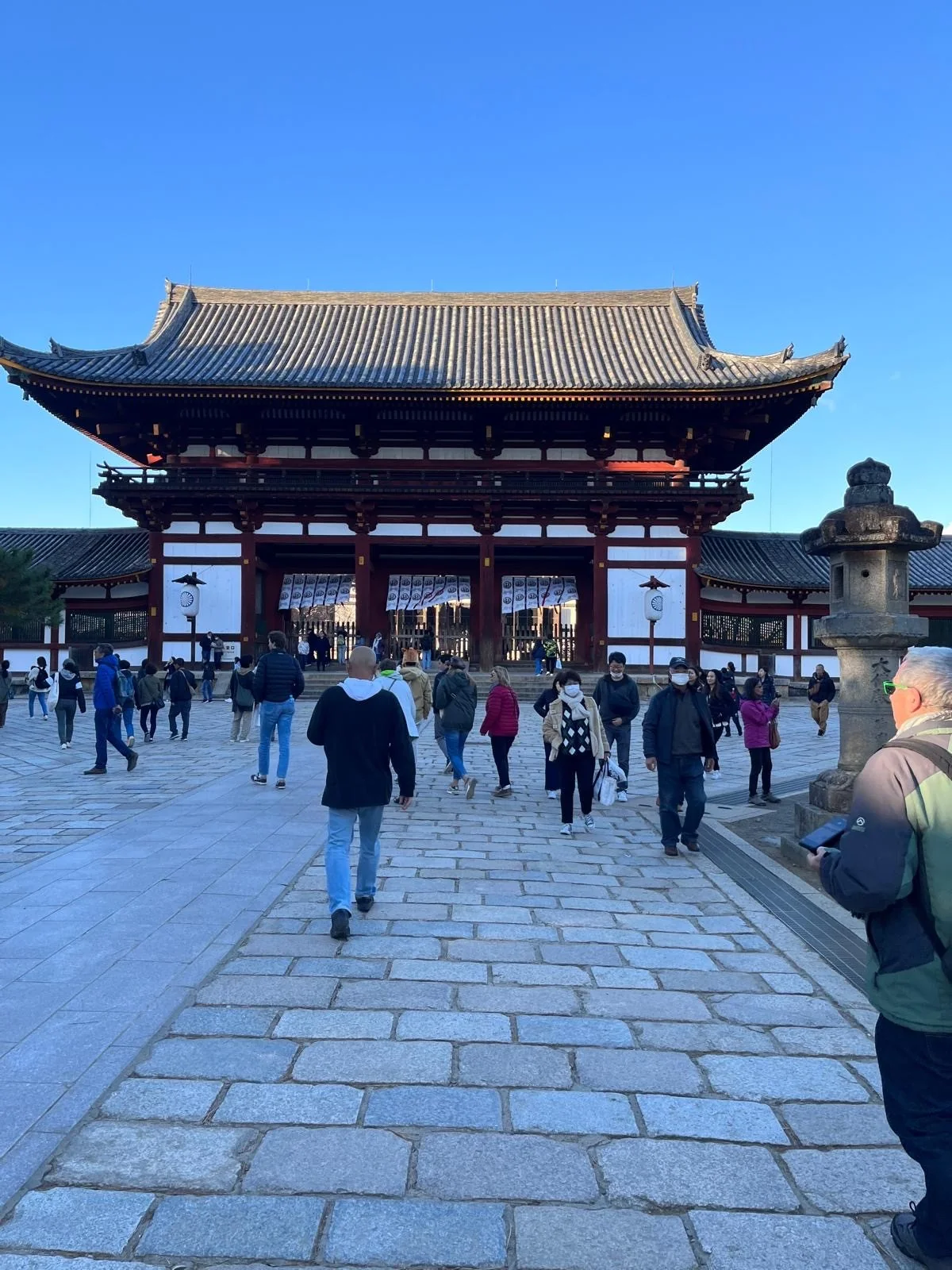
My photographs of Tōdai-ji concentrate on its approaches and gates, from the red Chūmon to the enormous timber structure of Nandaimon. They introduce a temple whose importance reaches far beyond its size. Emperor Shōmu ordered the creation of the Great Buddha in 743; the image was consecrated in 752. The project belongs to a period when Buddhism and the protection of the state were closely connected. For a first visit, I would make time for the Great Buddha Hall during its admission hours, rather than arriving only for an exterior photograph. The hall seen today was rebuilt after earlier fires: Nara’s history is also a history of repair and renewal.
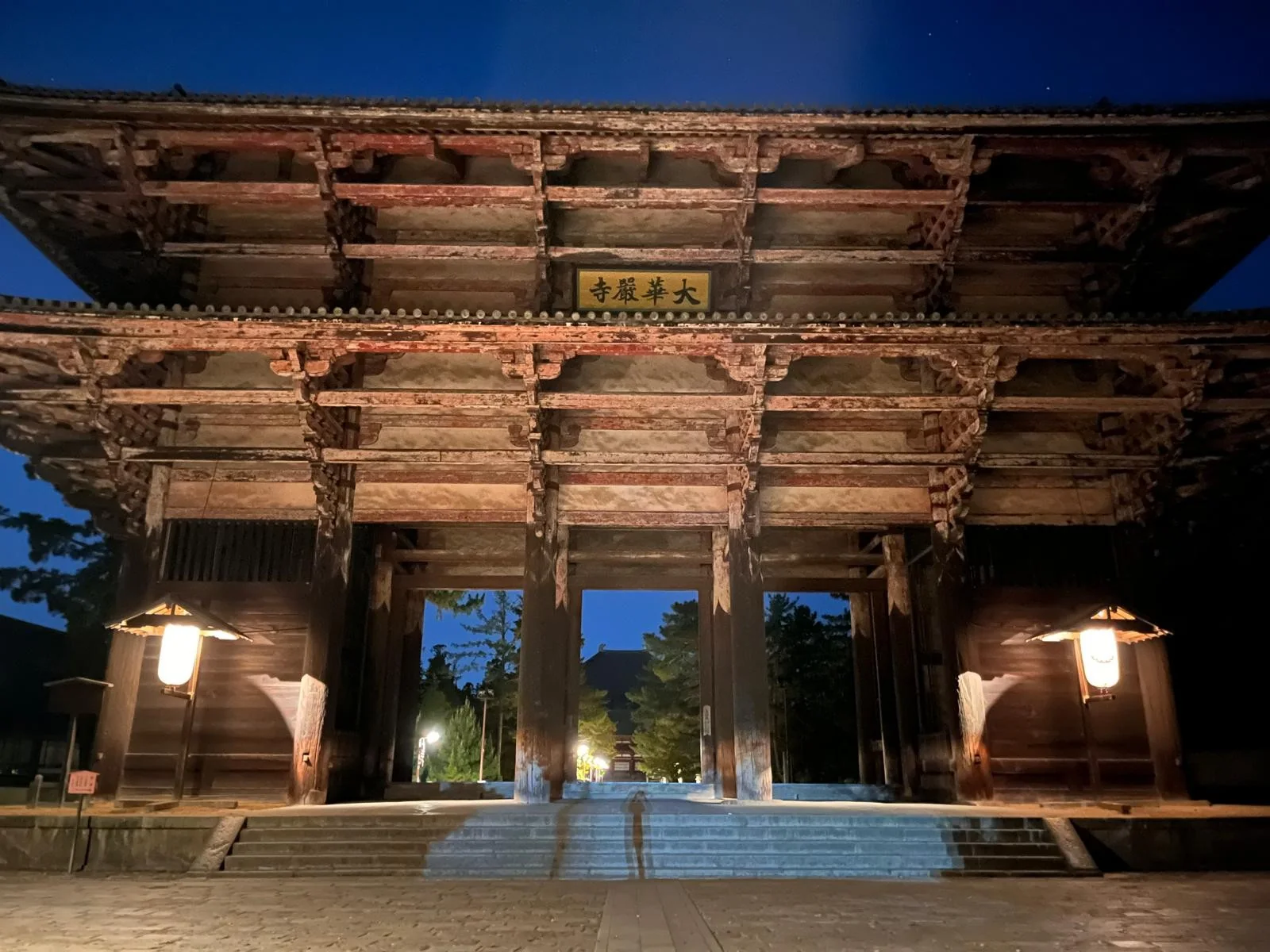
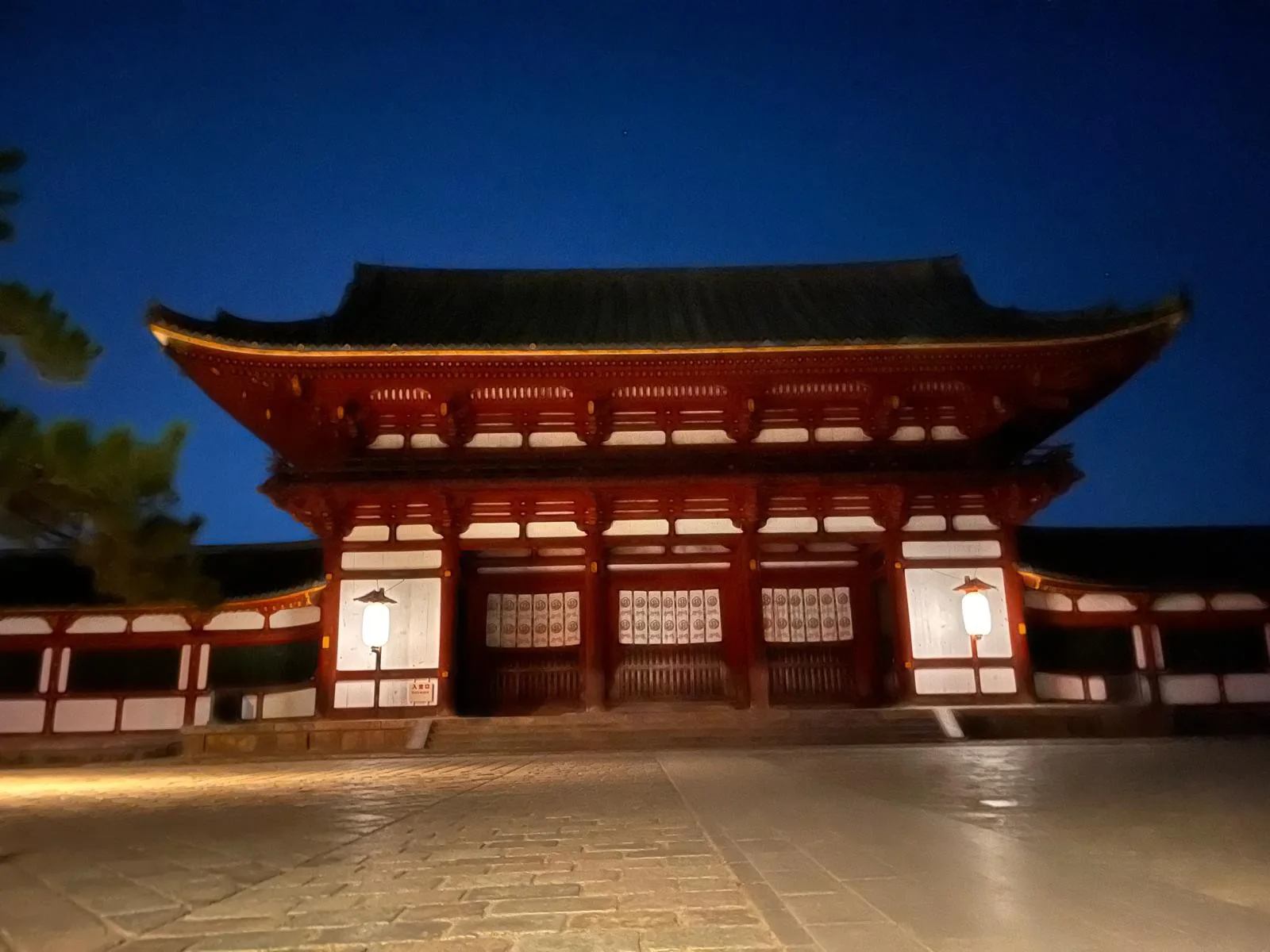
The same gates after dark
I also photographed the temple approach at night, when the illuminated gate stands against a deep blue sky and individual lamps define the path. Placed beside the daytime photographs, those images show how much a change of light can alter the same architecture. They record my visits, not a guaranteed nightly lighting programme. Temple interiors have their own opening hours, and an accessible approach does not mean that the halls are open. I would finish any paid visits first and treat an evening walk as a separate part of the day, checking access and the last train before staying late.
A route with room to look
For a first visit, I would suggest Kintetsu-Nara Station → Kōfuku-ji → Sarusawa Pond → Nara Park → Tōdai-ji, with time for lunch and pauses between the stops. This is a suggested route, not the exact chronology of my photographs. Starting at JR Nara instead gives you a longer approach along Sanjō-dōri. I would allow most of a day for the central sights rather than attach Nara to an already crowded afternoon. Kasuga Taisha can extend the walk if there is time and energy; I would leave that extension optional so there is still time to linger along the way. Save farther-flung monuments for another outing.
Staying connected
For maps, train times and messages while traveling in Japan, I recommend an eSIM for mobile data. Compare EVASIM plans before you travel, and check your phone’s eSIM compatibility. For maps and onward travel, compare Japan data plans from Airalo / Yesim / GigSky; check device compatibility and coverage before choosing. Affiliate links: I may earn a commission if you book, at no extra cost to you.
Use code TRAVELWITHTAKA for 5% off eligible EVASIM eSIM products and regional plans.
TRAVELWITHTAKA · Get the EVASIM discount
Affiliate link: Travel With Taka may earn a commission if you buy through this link.
Taka’s Take
Across my visits, Nara has moved between grand temple fronts and smaller scenes: deer beside the paths, ordinary streets and a station forecourt shining with rain. Knowing a little of the city’s past gives the walk substance; leaving space between the famous sights gives it a rhythm of its own. My recommendation is to choose a few places and look properly. Nara does not need every stop in a guidebook squeezed into one visit. The changing weather and the photographs from different seasons already offer a reason to see it again.