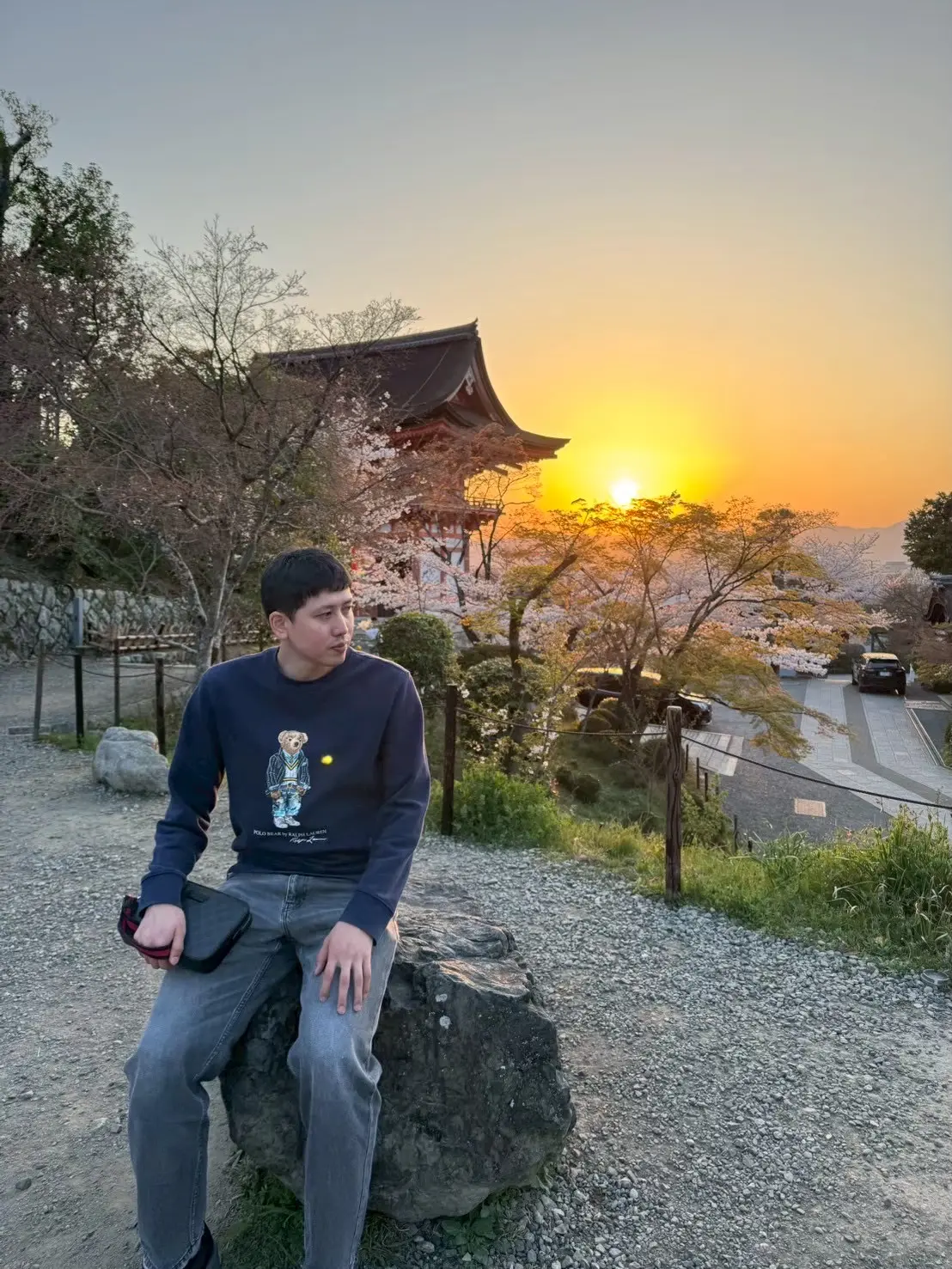
How I would arrange the trip
I would give Kyoto two unhurried city days: one for Kinkaku-ji and the northern gardens, another for the Kamo River, Kiyomizu-dera and Higashiyama. I would keep Uji for an additional half-day, or substitute it for part of the city itinerary when time is short. That leaves room for tea, lunch and the small turns that rarely make an itinerary but give a trip its character. These are photographs from separate visits, rather than one continuous weekend.
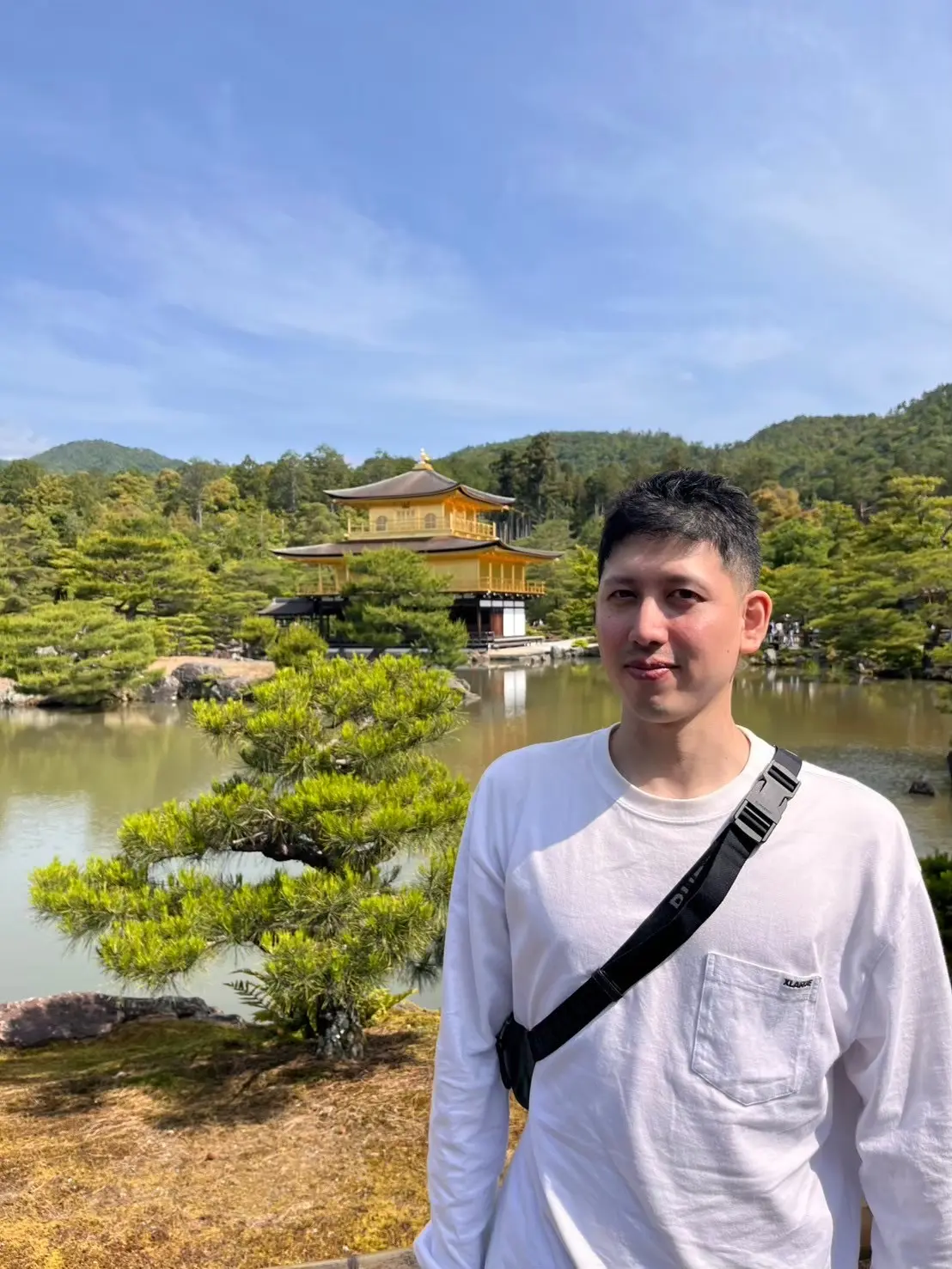
Kinkaku-ji: gold, water and a little distance
At Kinkaku-ji, I photographed the pavilion across Kyōko-chi pond, with pine branches framing its reflection. The gold is the obvious attraction; the water and garden give it space. I would allow time to follow the visitor path rather than leave after the first photograph. For the wider day, I would keep nearby northern sights together instead of travelling across the city between every stop.
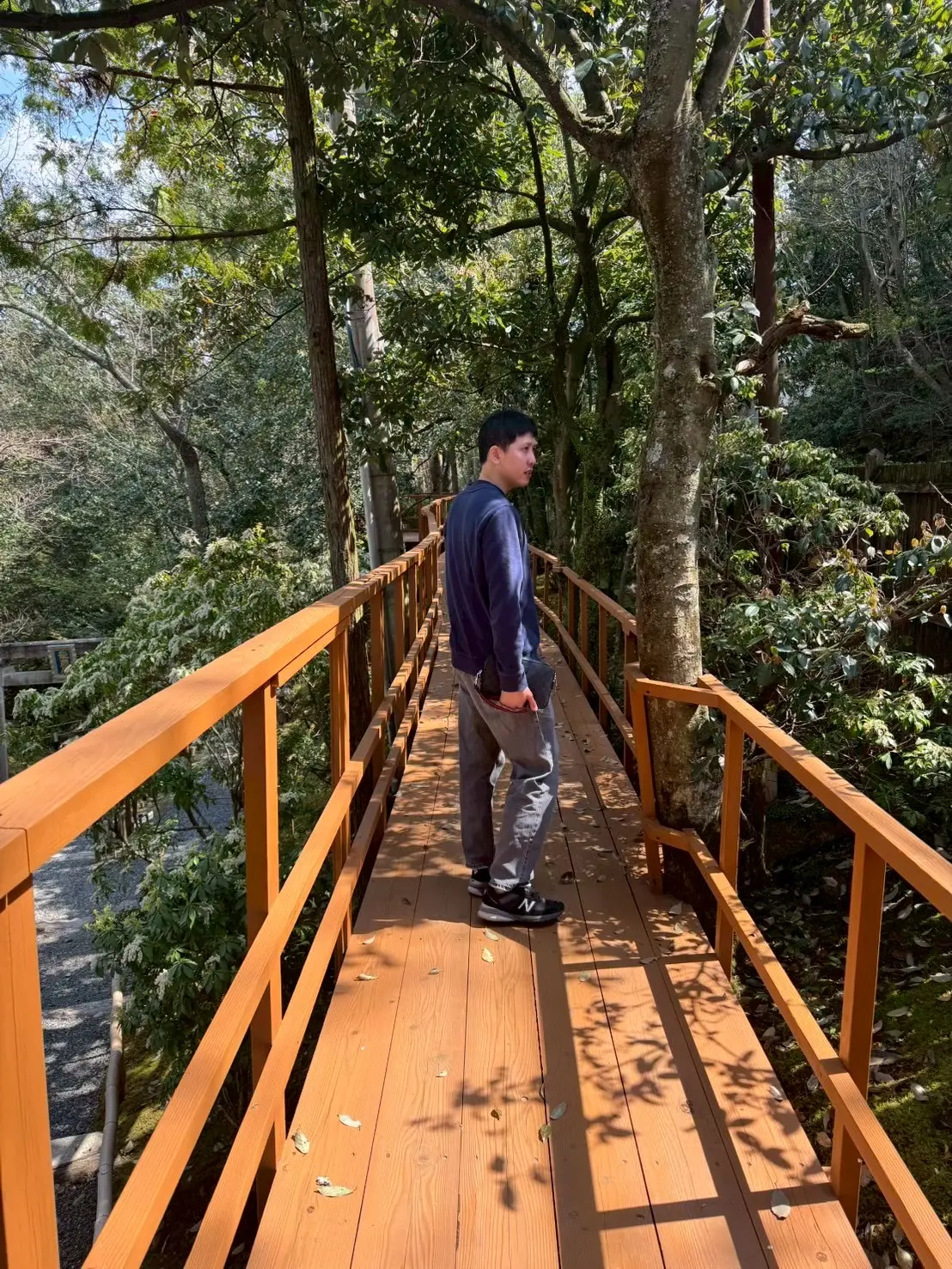
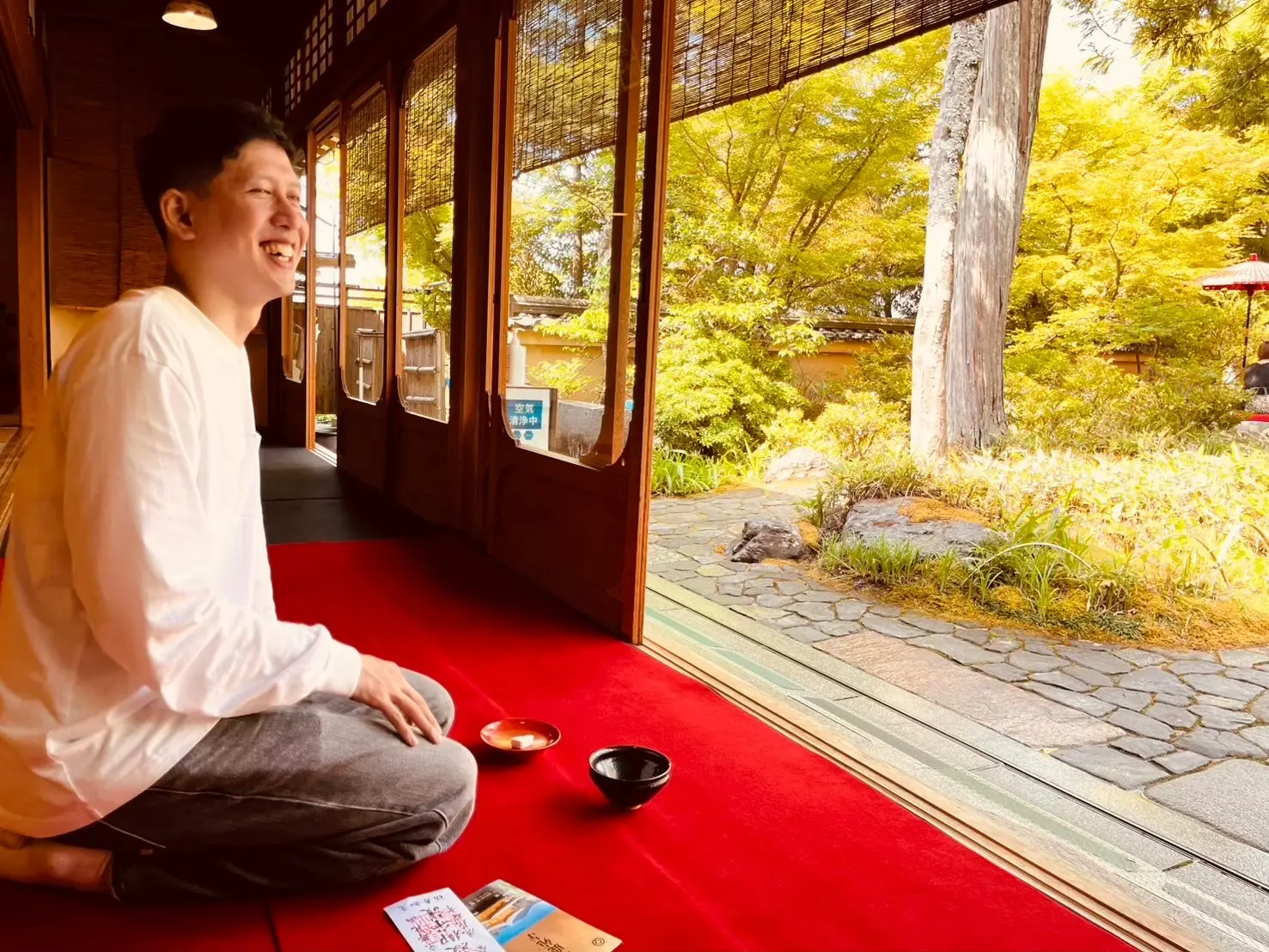
The Kyoto I find between the landmarks
Some of my favourite pauses in Kyoto were away from the headline sights: crossing a narrow bridge under the trees, sitting down for tea and giving myself time to enjoy a garden. I would make room for at least one stop like that between the temples. Otherwise, it is too easy to spend the day moving from landmark to landmark. I would leave a gap for a garden or tea stop that fits the neighbourhood, rather than make every hour depend on reaching the next attraction.
Spring walks among stone gates and blossoms
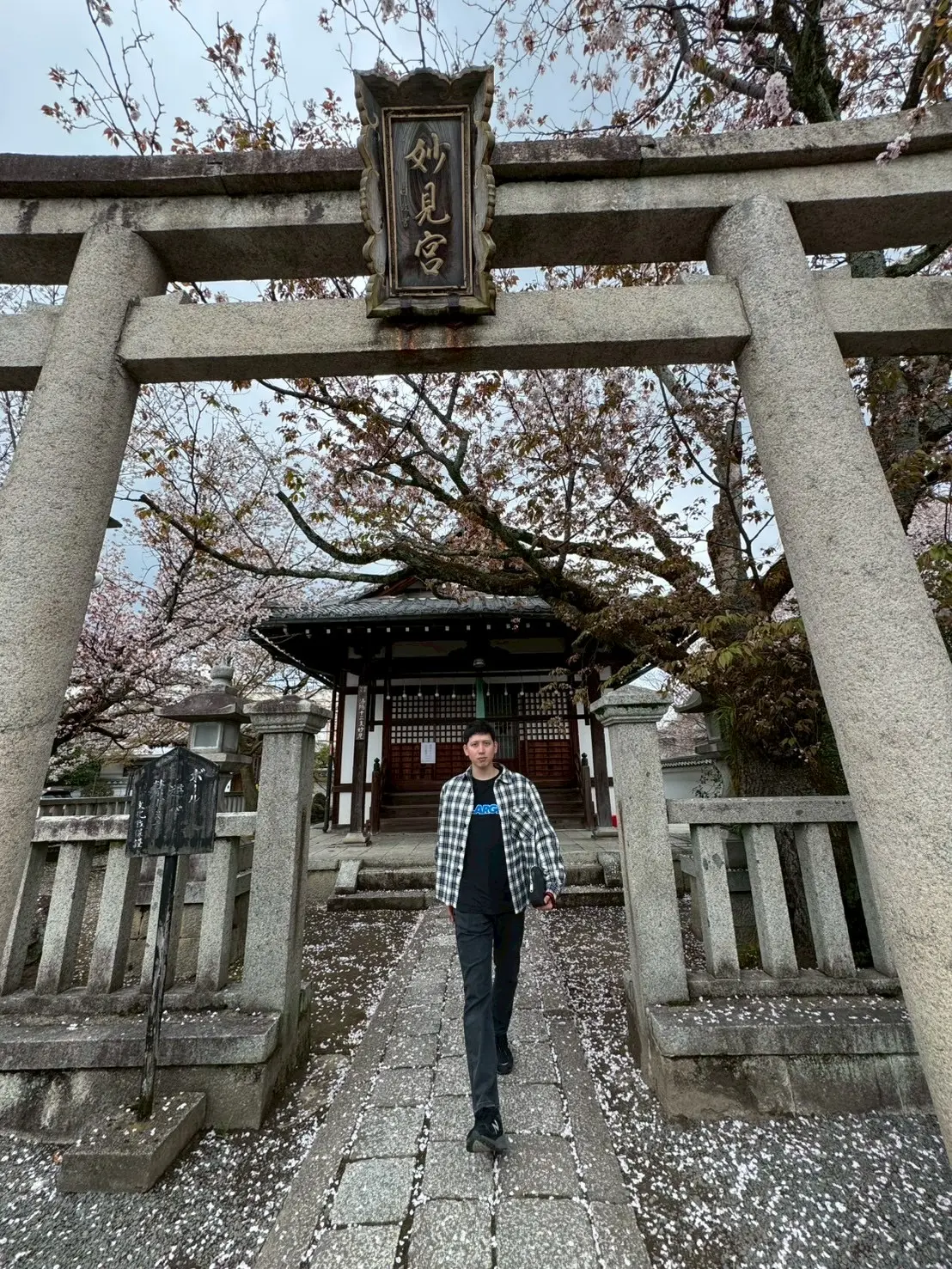
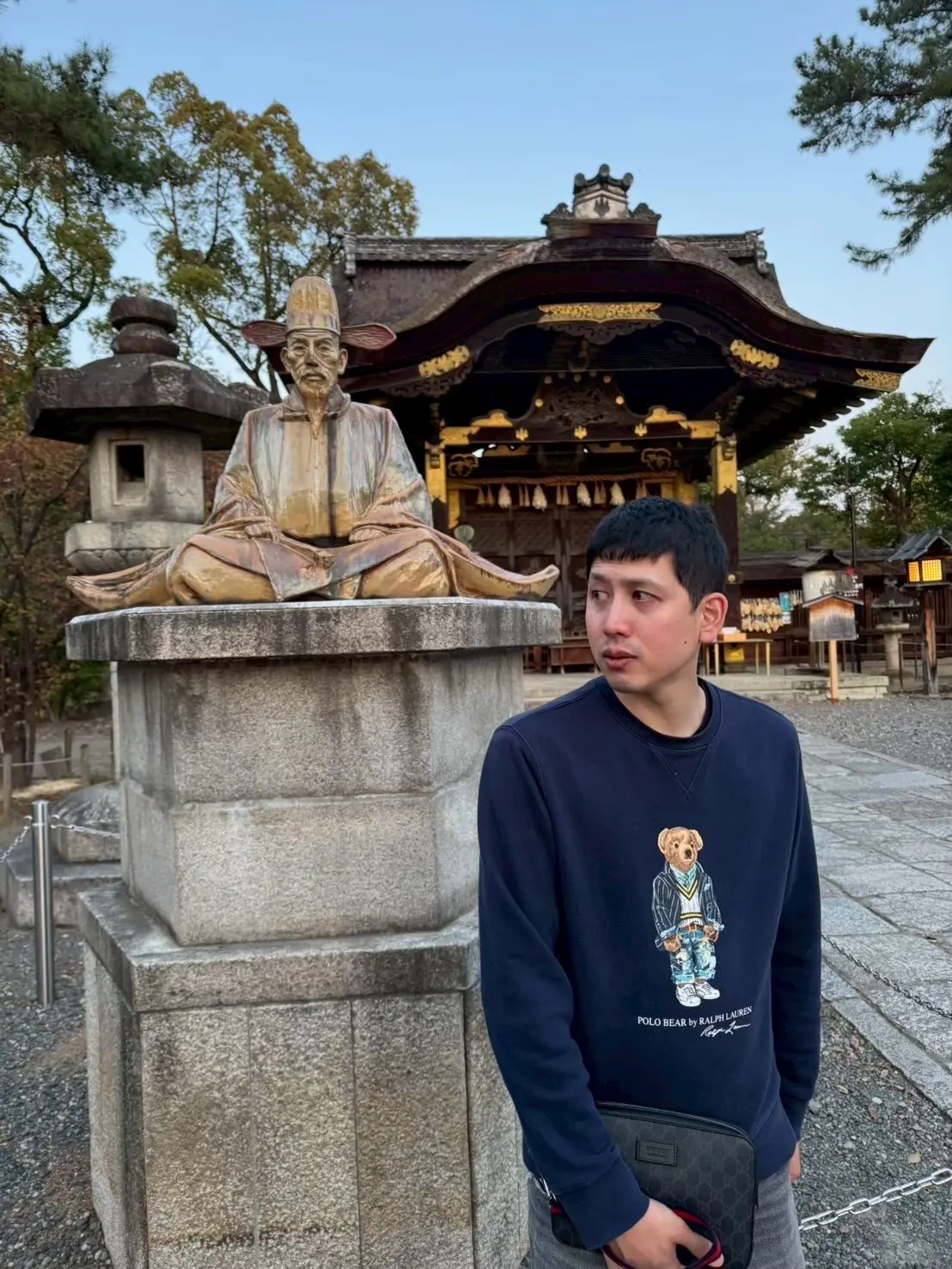
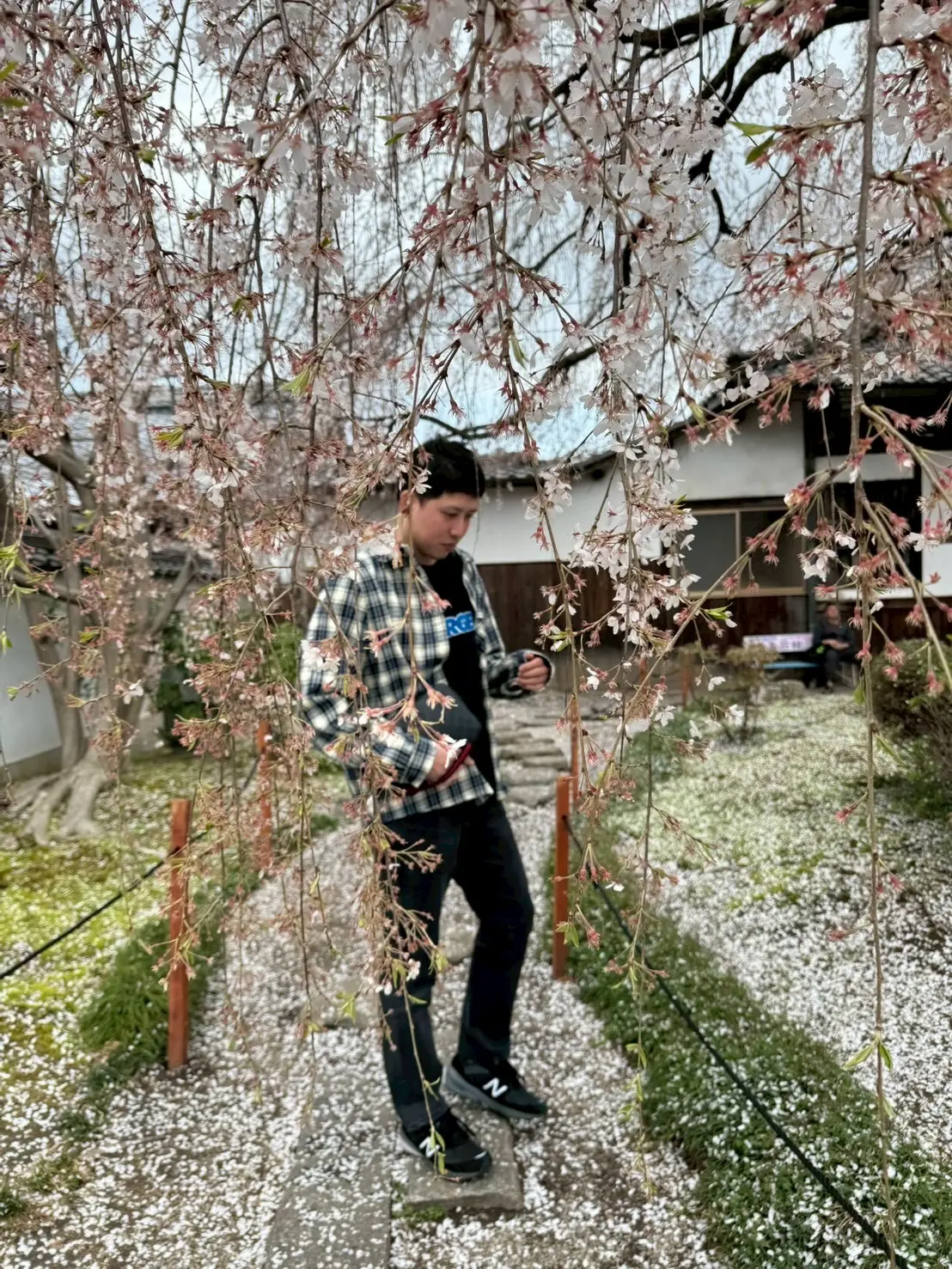
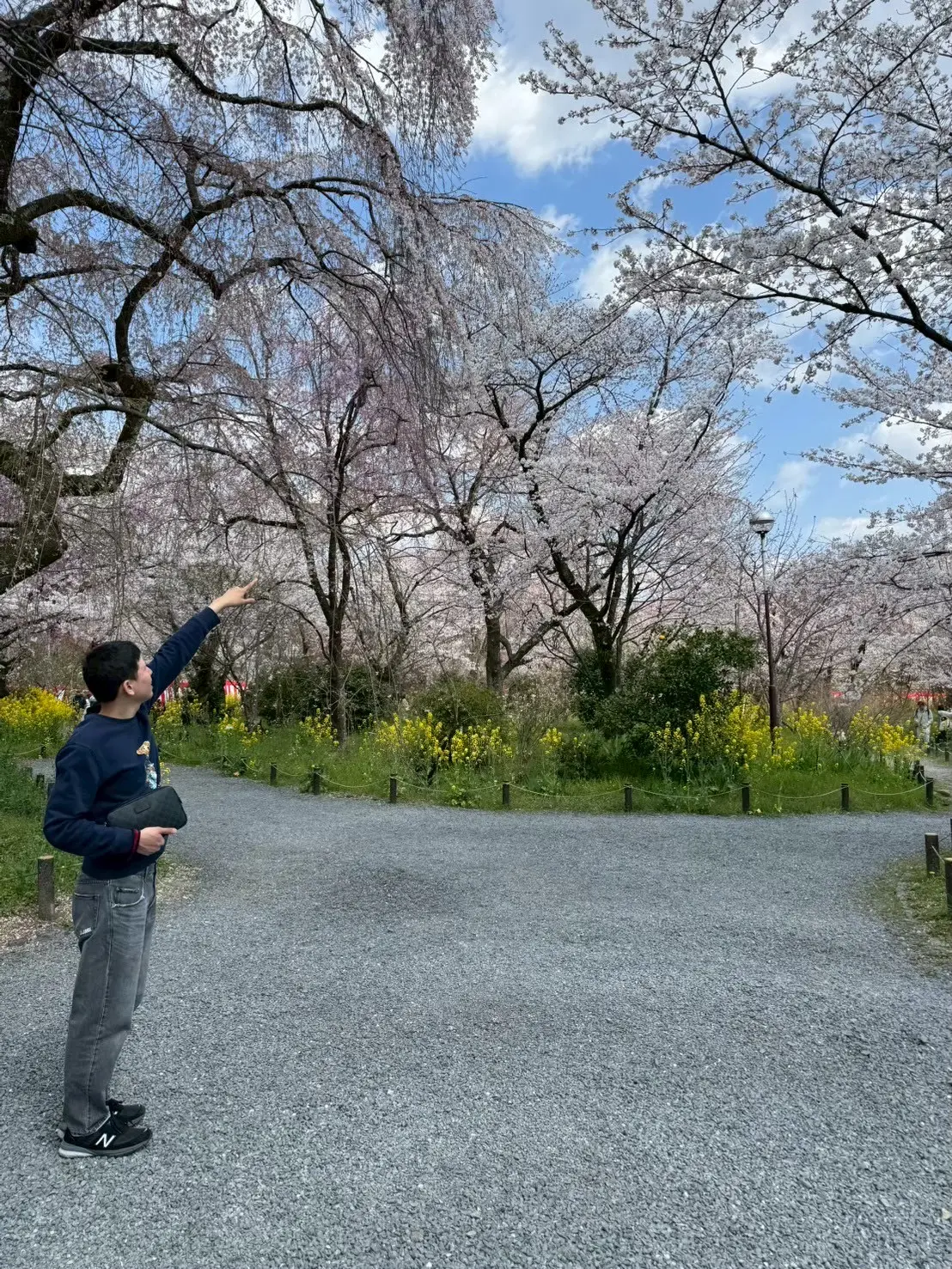
In my spring photographs, pale blossoms soften stone torii, shrine paths and the edges of a lane. A seated stone figure and an ornate gate draw my attention closer; elsewhere, flowers and yellow blooms open up the view. I would let weather and flowering conditions shape this part of a visit. Blossom dates vary, so I would check local updates shortly before travelling and keep another garden or neighbourhood walk in mind. To walk without carrying your bags, check nearby staffed storage locations with Radical Storage, including opening hours and collection times. Affiliate links: I may earn a commission if you book, at no extra cost to you.
A little breathing room beside the Kamo River
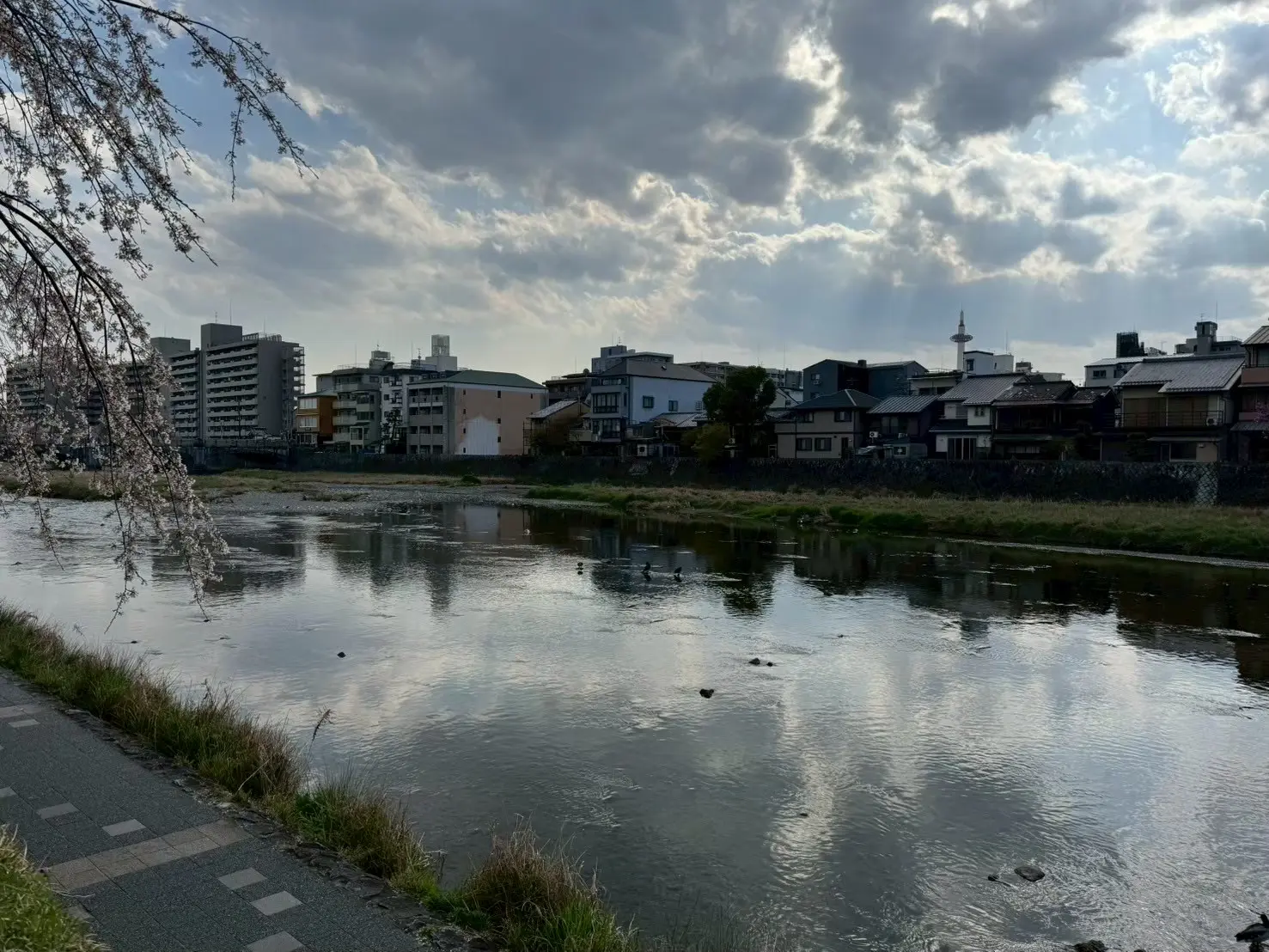
My river photograph holds a broad sky, low buildings and clouds reflected on the water. It is a different scale from a temple courtyard, and a reminder to leave some open space in a Kyoto day. I would use a riverside stretch as a pause between neighbourhoods, with time to sit or find lunch nearby. It does not need to become a long walk to earn its place in the route.
Kiyomizu-dera and the light of Higashiyama
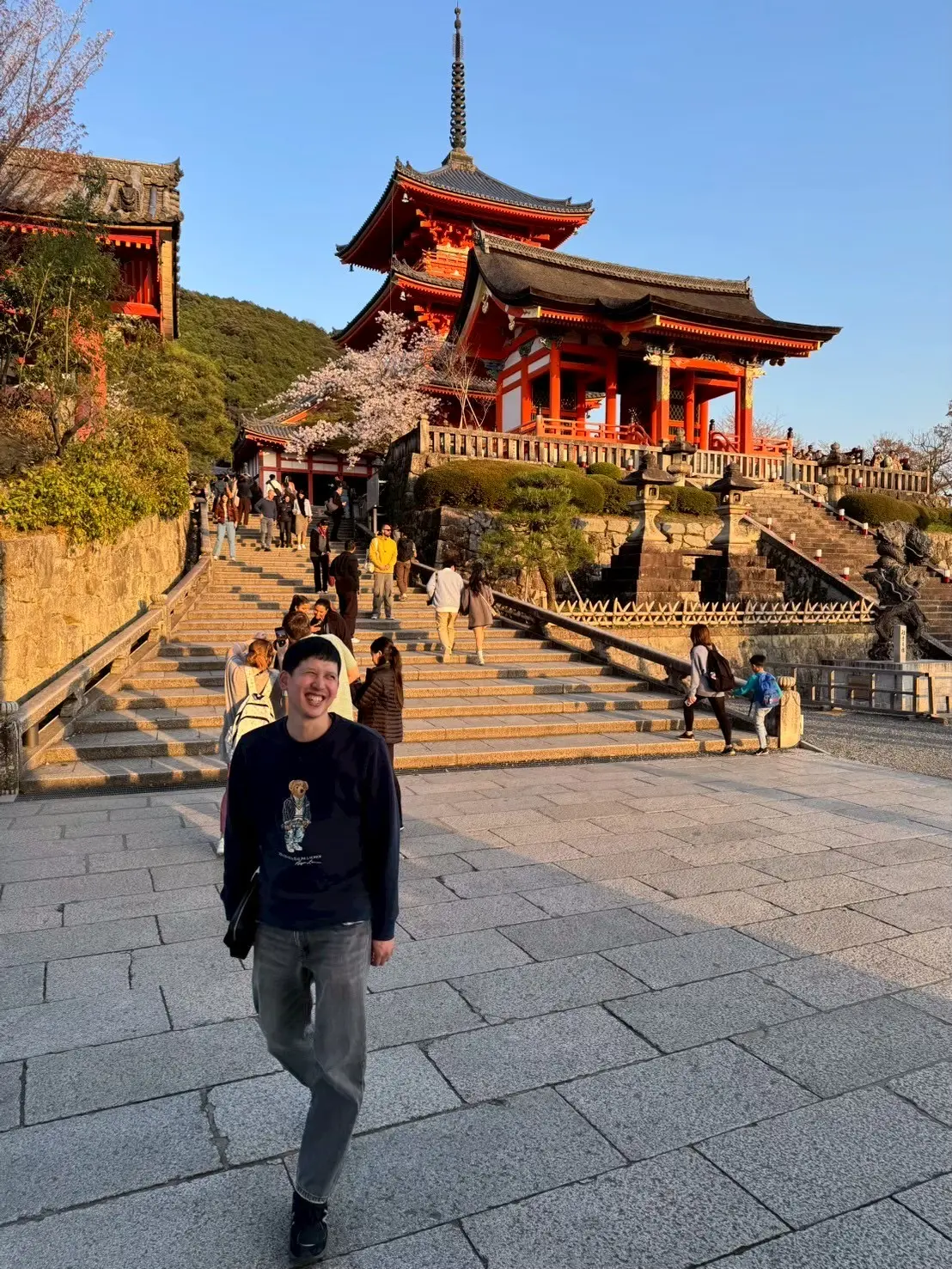
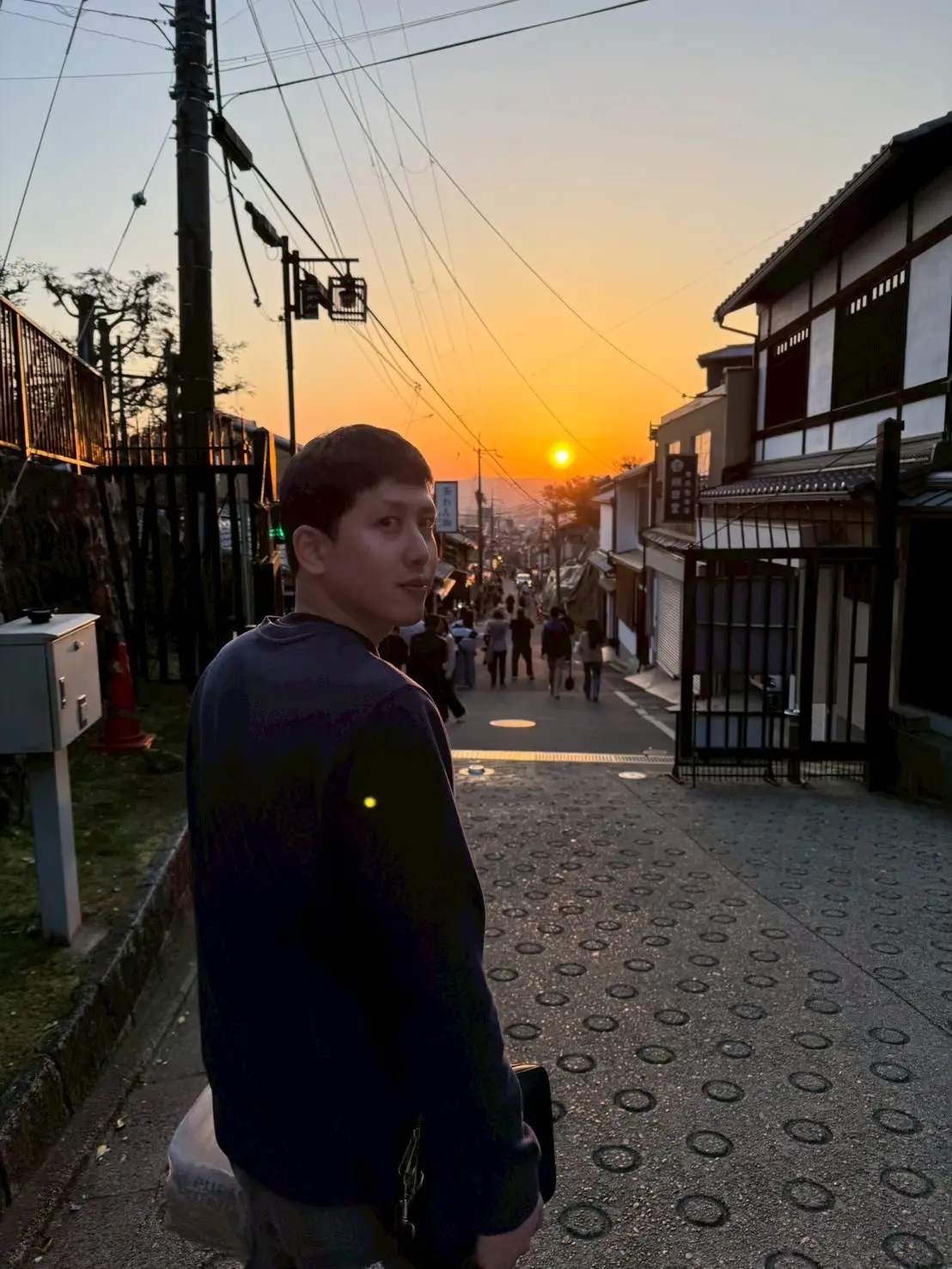
At Kiyomizu-dera, the vermilion gate, steps and pagoda give my photographs their strongest colour. In other scenes, tiled roofs and the streets of Higashiyama catch the low sun. For a first visit, I would link the temple with Sannenzaka and Ninenzaka, taking the slopes slowly and checking opening times before planning a late arrival. I keep to public paths, respect photography signs and leave doorways clear: these streets are also a living neighbourhood.
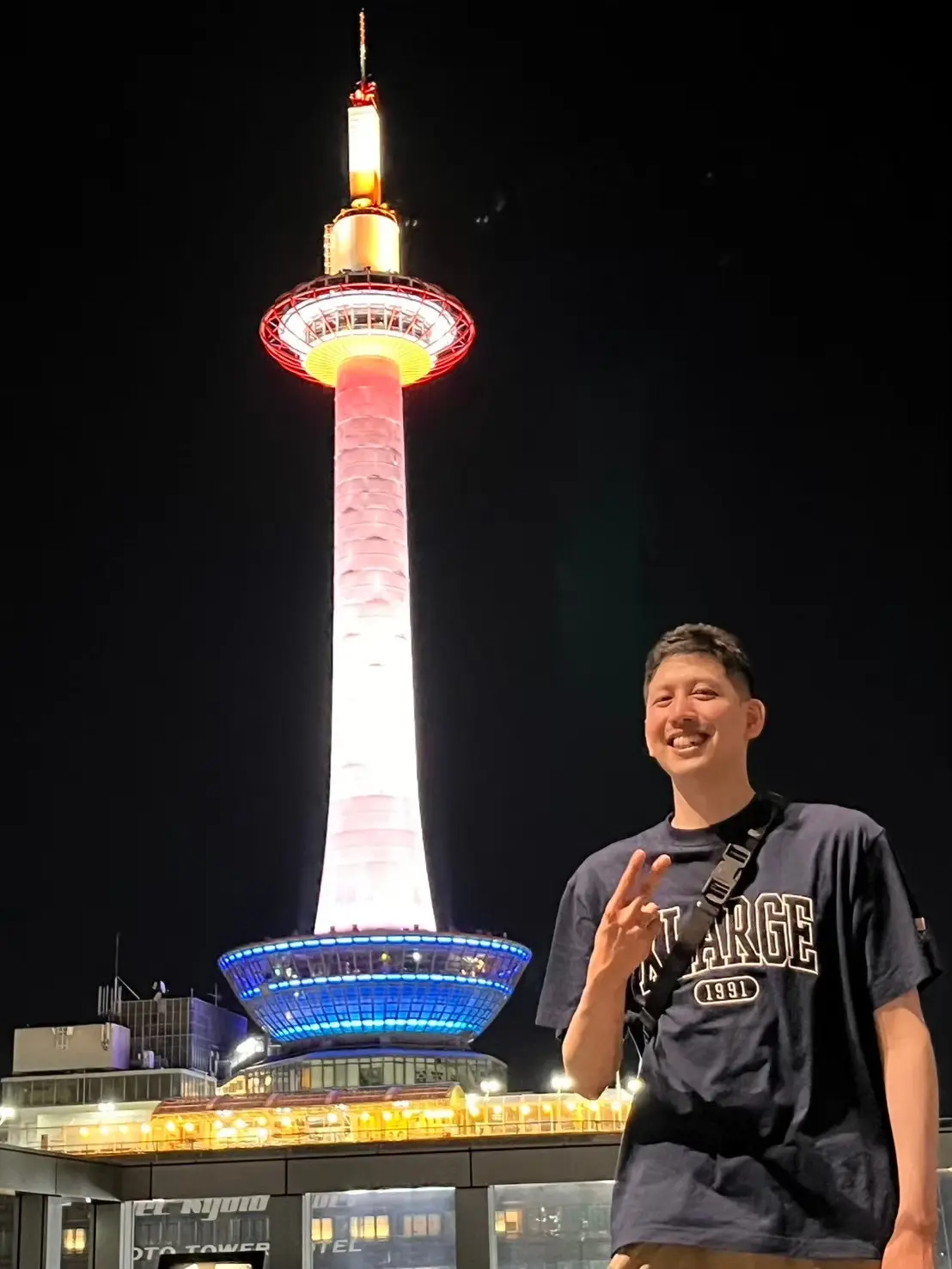
Kyoto Tower after dark
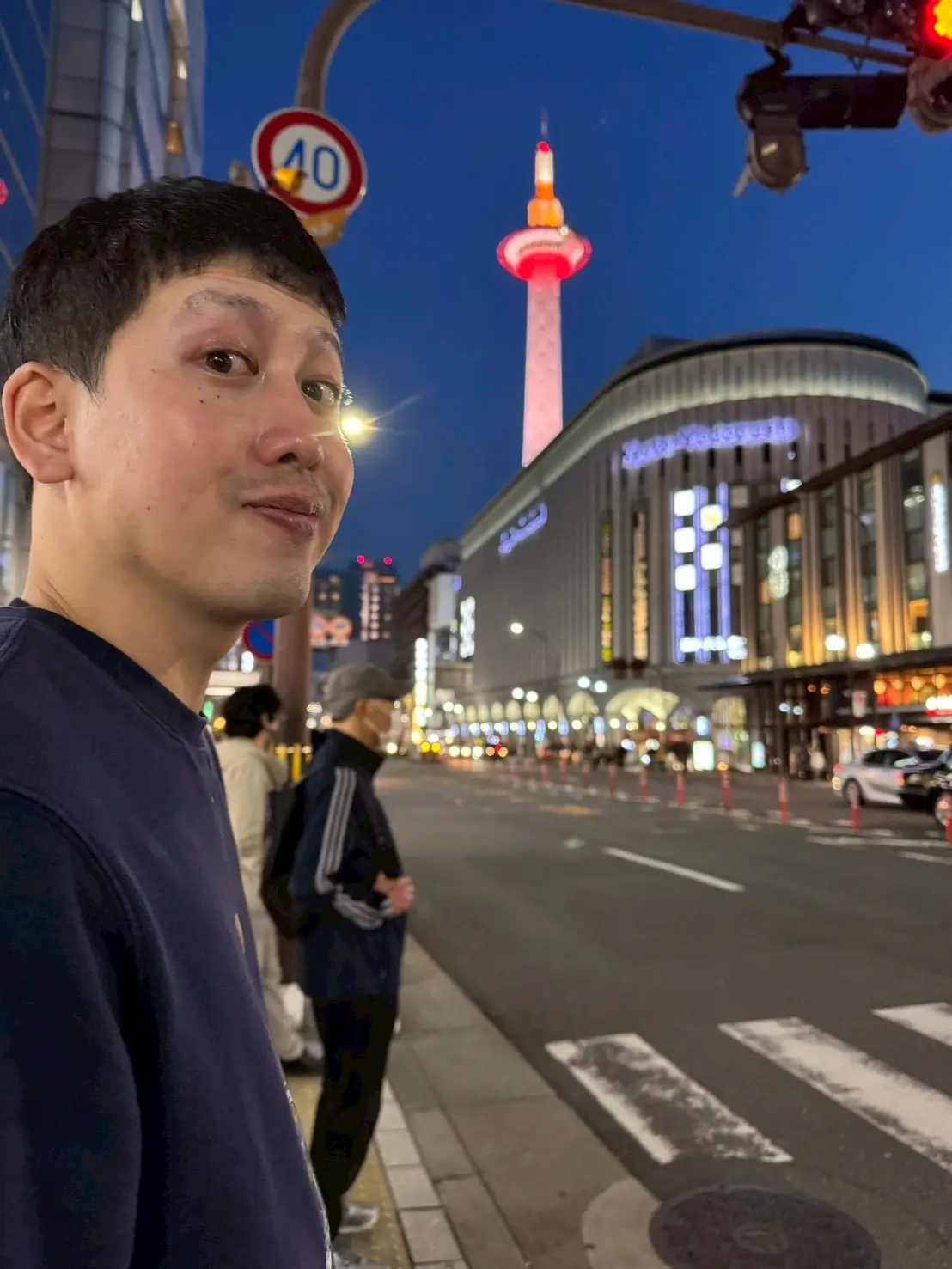
My photographs near Kyoto Station bring the journey back to the present: traffic, lit windows and the tower rising above the streets. The two night views show how much the sky changes the scene. I would save this area for an evening when I already need the station, rather than cross town solely for a photograph. Dinner or an onward train can make it a natural end to a city day.
Uji and Byōdō-in: a pond with a thousand years of history
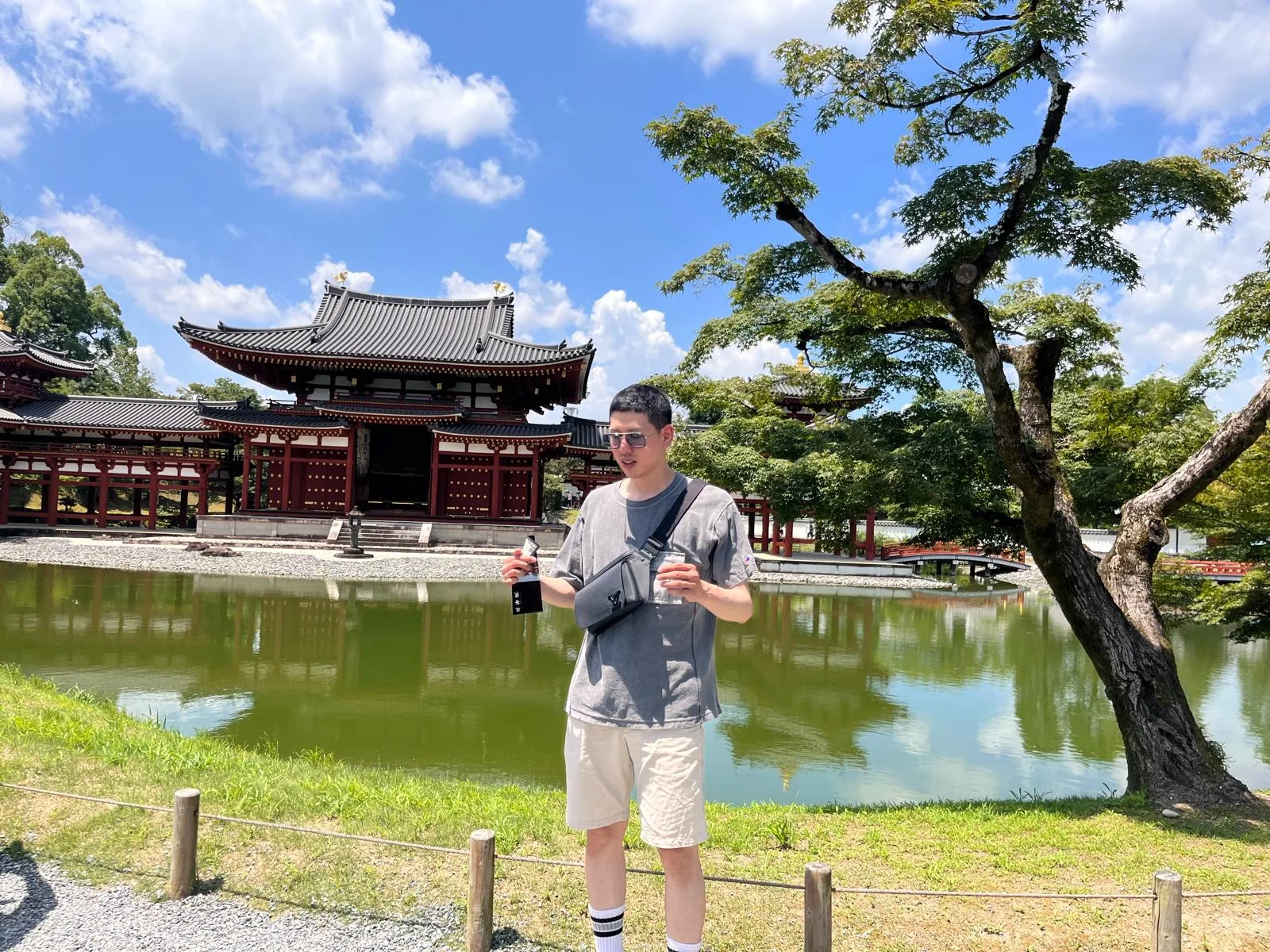
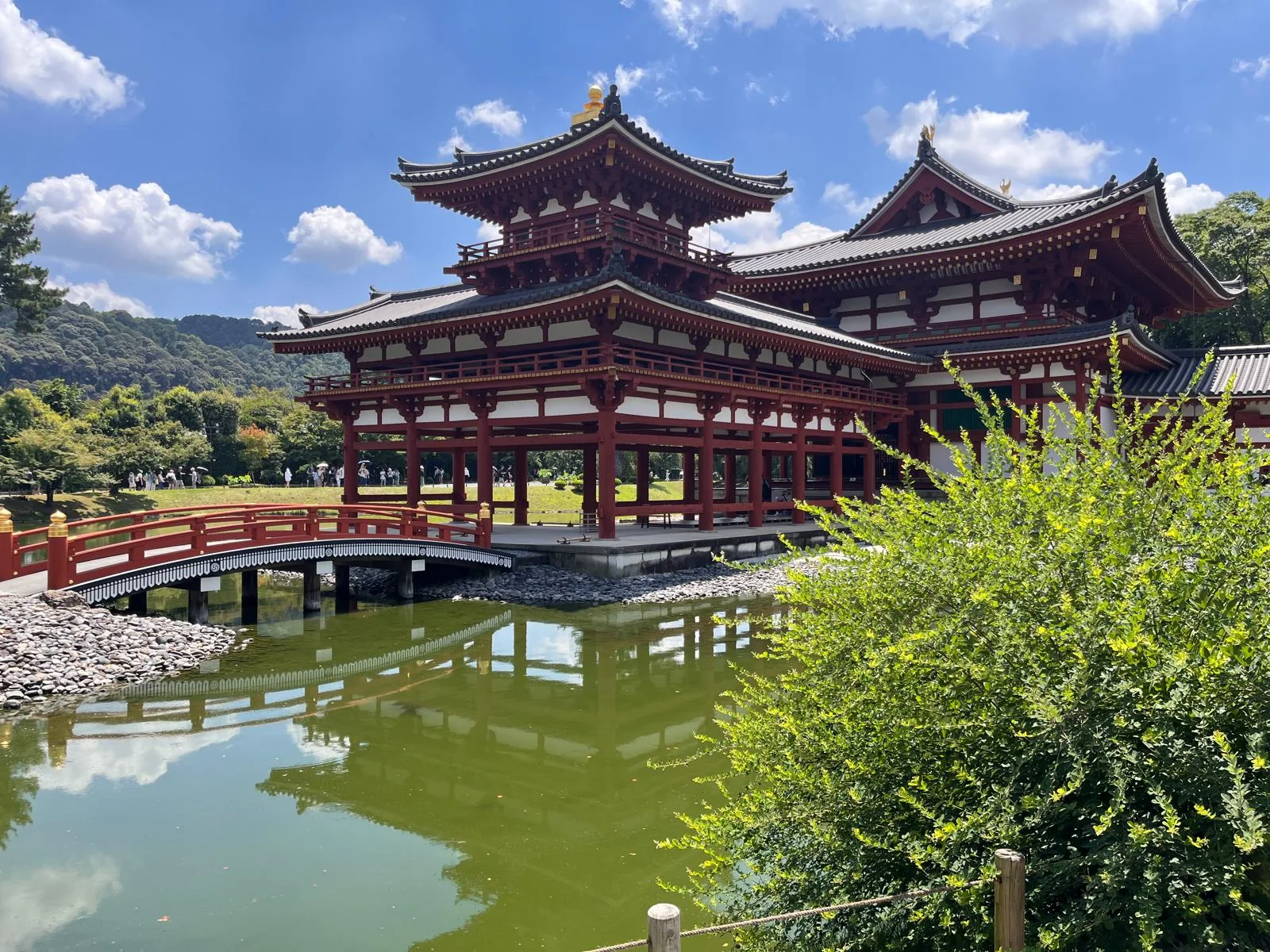
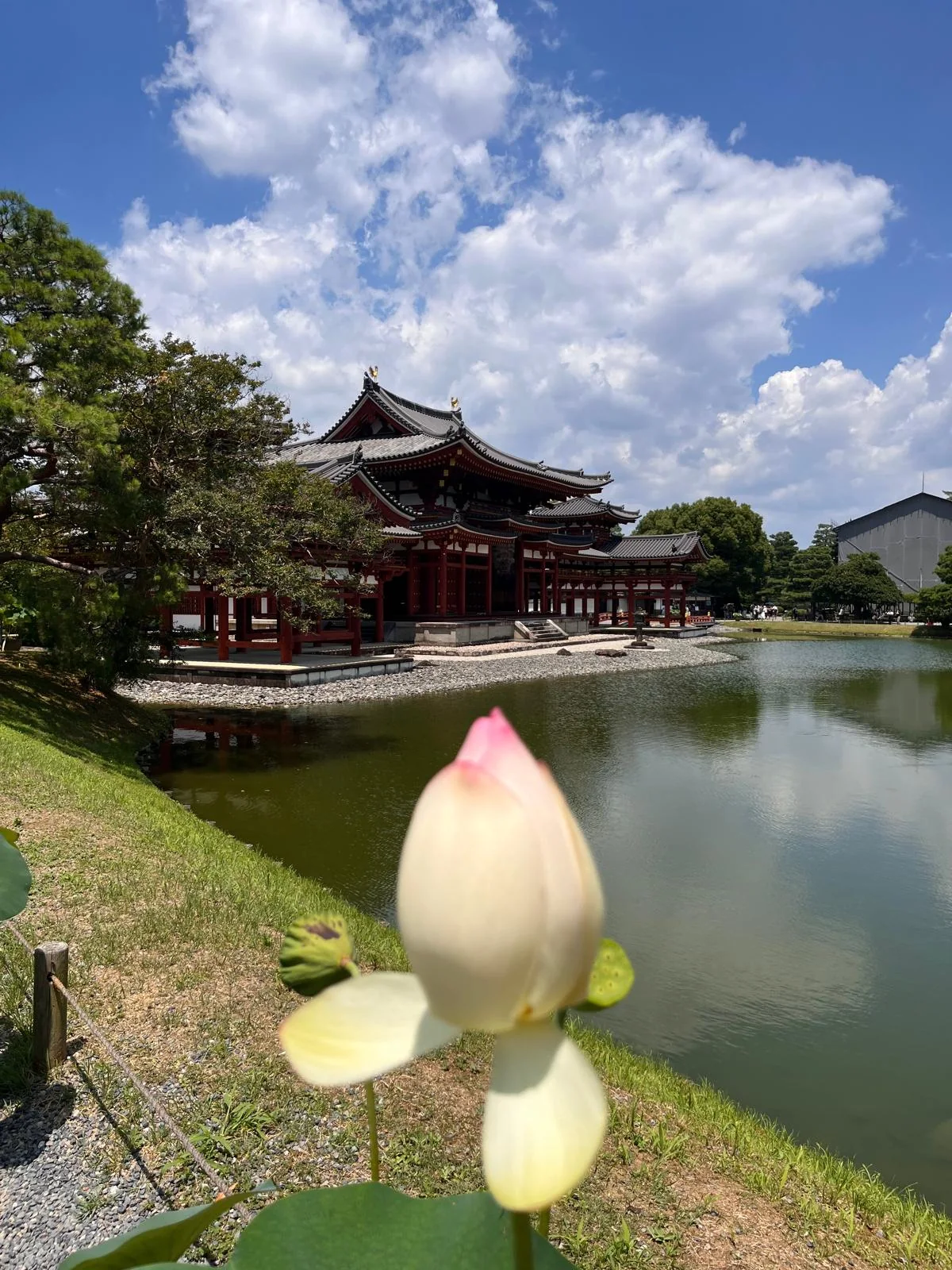
In Uji, Kyoto Prefecture, I stood beside Byōdō-in's pond with Phoenix Hall behind me. My closer photograph follows the red corridor and arched bridge across the water; another places a lotus bud in the foreground. Built in 1053 by Fujiwara no Yorimichi, Phoenix Hall was conceived as an image of the Buddhist Pure Land. The pond is part of that vision, not merely a pretty foreground. I would give Uji its own half-day: time to walk the garden, look at the hall from different angles and explore nearby streets. The Hōshōkan museum is another option. Phoenix Hall's interior uses separate timed admission, so I would check the official arrangements before visiting. Uji's tea shops can extend the excursion, with a stop chosen to suit the day.
Staying connected
For maps, train times and messages while traveling in Japan, I recommend an eSIM for mobile data. Compare EVASIM plans before you travel, and check your phone’s eSIM compatibility. For maps and onward travel, compare Japan data plans from Airalo / Yesim / GigSky; check device compatibility and coverage before choosing. Affiliate links: I may earn a commission if you book, at no extra cost to you.
Use code TRAVELWITHTAKA for 5% off eligible EVASIM eSIM products and regional plans.
TRAVELWITHTAKA · Get the EVASIM discount
Affiliate link: Travel With Taka may earn a commission if you buy through this link.
Taka's Take: leave room for the view
The thread through my Kyoto photographs is space: water in front of a golden pavilion, a garden beyond a room, a river beneath a broad sky. Byōdō-in adds another chapter without needing to compete with the city. My advice is to choose a few places well, keep nearby stops together and allow time to look. For an overnight stay and a meal, my ROKU KYOTO and TENJIN stories continue below.